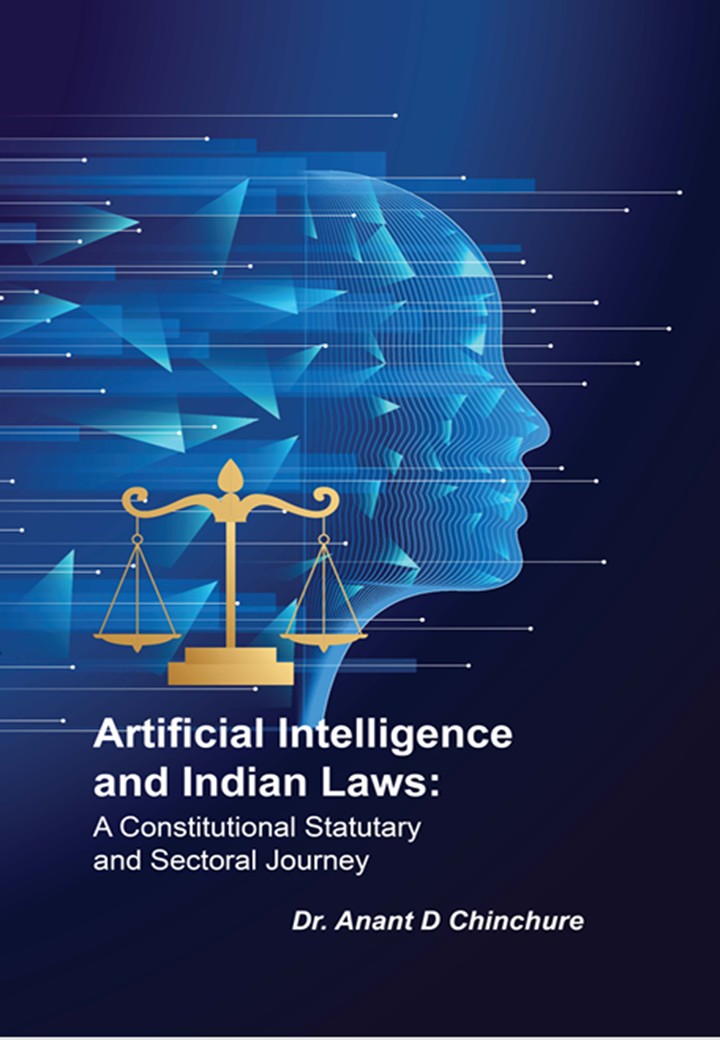
Artificial Intelligence and Indian Laws: A Constitutional, Statutory and Sectoral Journey
ISBN: 978-93-5525-263-0
The rapid evolution of Artificial Intelligence (AI) has ushered in a transformative era that challenges traditional legal frameworks across the globe. In India, a nation characterized by its constitutional depth, diverse socio-economic fabric, and dynamic regulatory landscape, the intersection of AI and law presents both unprecedented opportunities and complex challenges. This book, Artificial Intelligence and Indian Laws: A Constitutional, Statutory and Sectorial Journey, seeks to explore this evolving interface with a critical and structured approach.
At its core, the Indian legal system is rooted in constitutional values - justice, liberty, equality, and fraternity. As AI systems increasingly influence decision-making in governance, commerce, healthcare, finance, and criminal justice, it becomes imperative to examine how these technological advancements align with or disrupt these foundational principles. Issues such as algorithmic bias, data privacy, surveillance, accountability, and transparency are no longer abstract concerns but real challenges demanding legal scrutiny.
This work begins with a constitutional analysis, reflecting on how fundamental rights - particularly the right to privacy, freedom of speech and expression, and equality before law - are impacted in an AI-driven ecosystem. It further evaluates the role of the State in regulating AI technologies while ensuring innovation is not stifled.
The journey then transitions into statutory frameworks, examining existing Indian laws such as the Information Technology regime, data protection developments, and liability principles. While these laws were not originally designed with AI in mind, their interpretation and adaptation are crucial in addressing emerging legal questions surrounding autonomous systems and machine learning technologies.
Finally, the book adopts a sectorial lens, exploring the application and implications of AI in key domains like, governance, and criminal justice. These sectors present unique regulatory concerns, ethical dilemmas, and policy considerations that require nuanced understanding and tailored legal responses.
The chapters in this book do not claim to provide definitive answers to all the questions posed by AI. Instead, it aims to initiate a thoughtful dialogue among legal professionals, technologists, and students. It is an invitation to critically engage with the law as it stands today and to envision how it must evolve to meet the demands of an intelligent future.
In undertaking this journey, the reader is encouraged to appreciate both the transformative potential of AI and the enduring relevance of legal principles that safeguard human dignity and societal order. The path ahead is complex, but with informed discourse and balanced regulation, India can pave the way for a responsible and inclusive AI ecosystem.
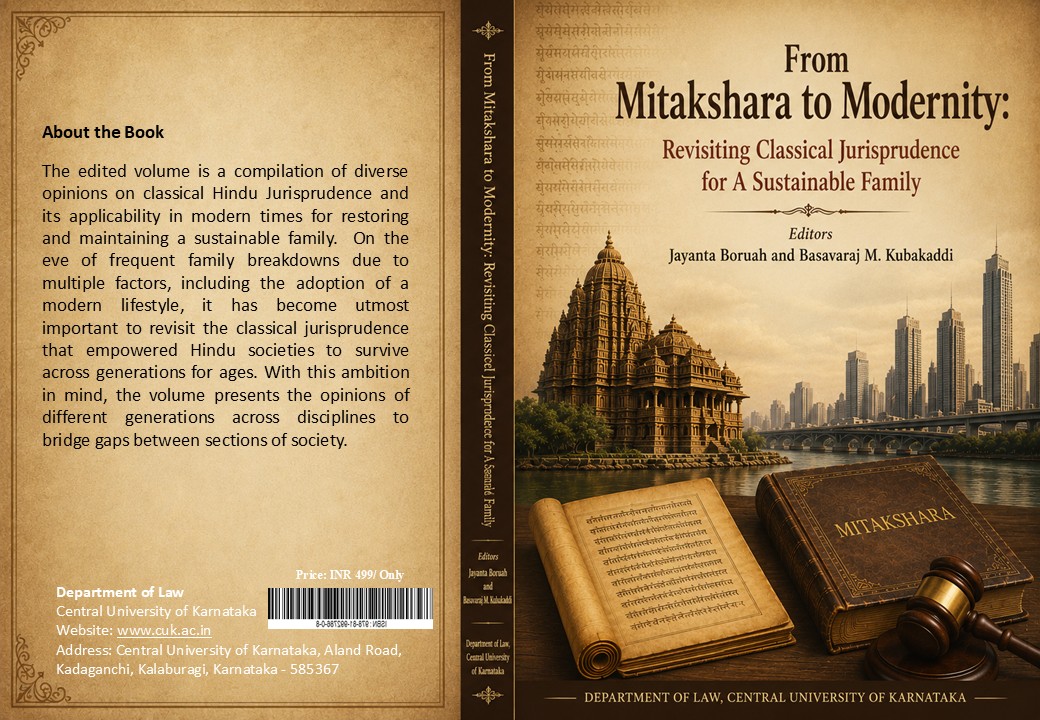
From Mitakshara to Modernity: Revisiting Classical Jurisprudence for A Sustainable Family
ISBN: 978-81-992786-0-8
The edited volume is a compilation of diverse opinions on classical Hindu Jurisprudence and its applicability in modern times for restoring and maintaining a sustainable family. On the eve of frequent family breakdowns due to multiple factors, including the adoption of a modern lifestyle, it has become utmost important to revisit the classical jurisprudence that empowered Hindu societies to survive across generations for ages. With this ambition in mind, the volume presents the opinions of different generations across disciplines to bridge gaps between sections of society.
All authors of this book are under an exclusive license to Central University of Karnataka @ 2025.
Disclaimer: The editors have taken all due care to avoid infringing any third-party rights and have endeavoured to preserve the originality of all contributions. However, if in any case any contribution, either wholly or in part, is found to violate or infringe any third-party rights, or is found to be plagiarised or detected with AI content beyond permissible limits, then the contributor against whose name such contribution has/have been published shall be liable. The editors shall be responsible only to the extent of removing or deleting such contribution from this compilation. The editors claim no responsibility for any plagiarised or AI-written content contributed by any contributors in this compilation.
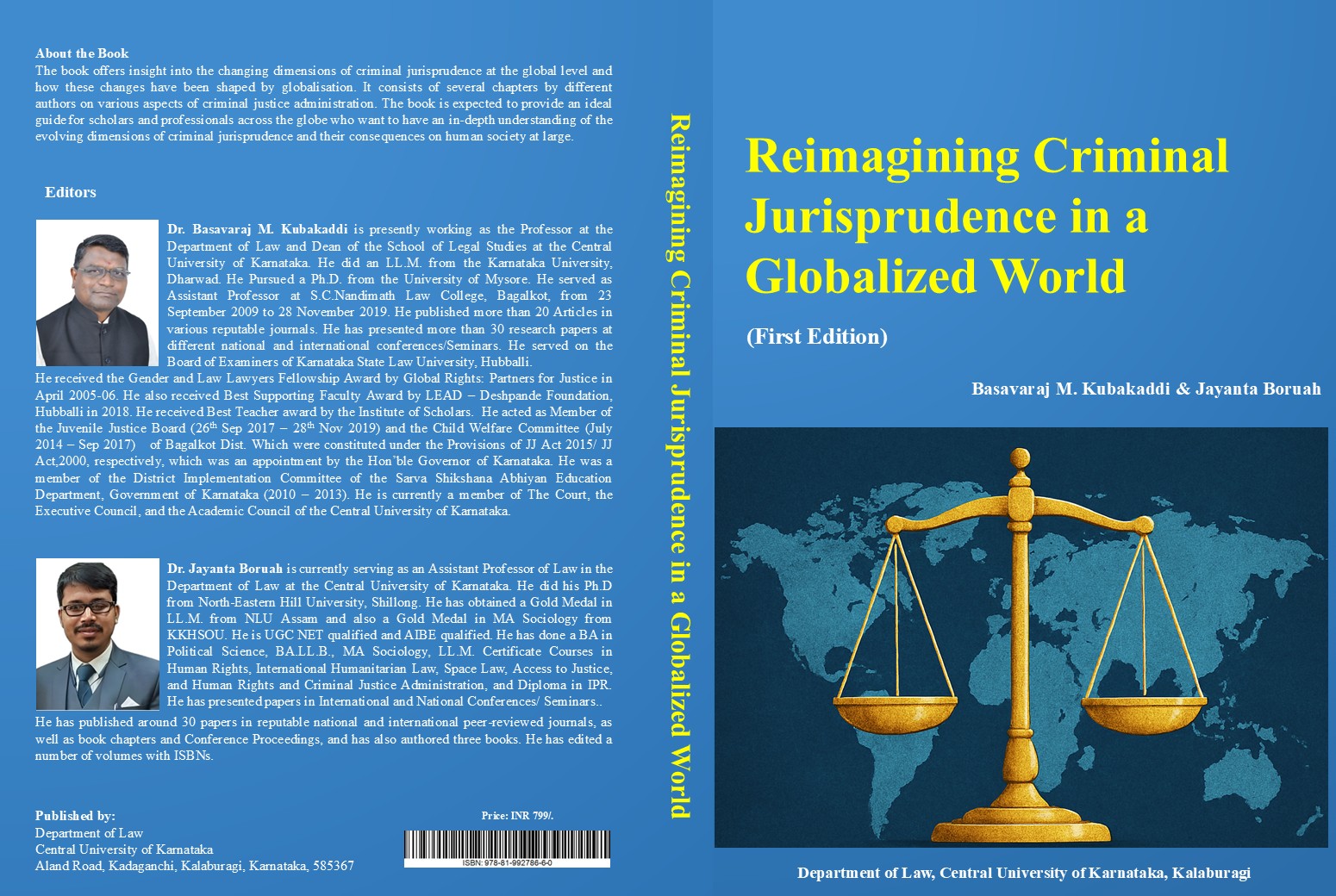
Reimagining Criminal Jurisprudence in A Globalised World
ISBN: 978-81-992786-6-0
The book offers insight into the evolving dimensions of criminal jurisprudence globally and how these changes have been shaped by globalisation. It consists of 14 chapters by different authors on various aspects of criminal justice administration. The book is expected to provide an ideal guide for scholars and professionals worldwide who seek an in-depth understanding of the evolving dimensions of criminal jurisprudence and their consequences for human society at large.
All authors of this book are under an exclusive license to Central University of Karnataka @ 2025.
Disclaimer: The editors have taken all due care to avoid infringing any third-party rights and have endeavoured to preserve the originality of all contributions. However, if in any case any contribution, either wholly or in part, is found to violate or infringe any third-party rights, or is found to be plagiarised or detected with AI content beyond permissible limits, then the contributor against whose name such contribution has/have been published shall be liable. The editors shall be responsible only to the extent of removing or deleting such contribution from this compilation. The editors claim no responsibility for any plagiarised or AI-written content contributed by any contributors in this compilation.
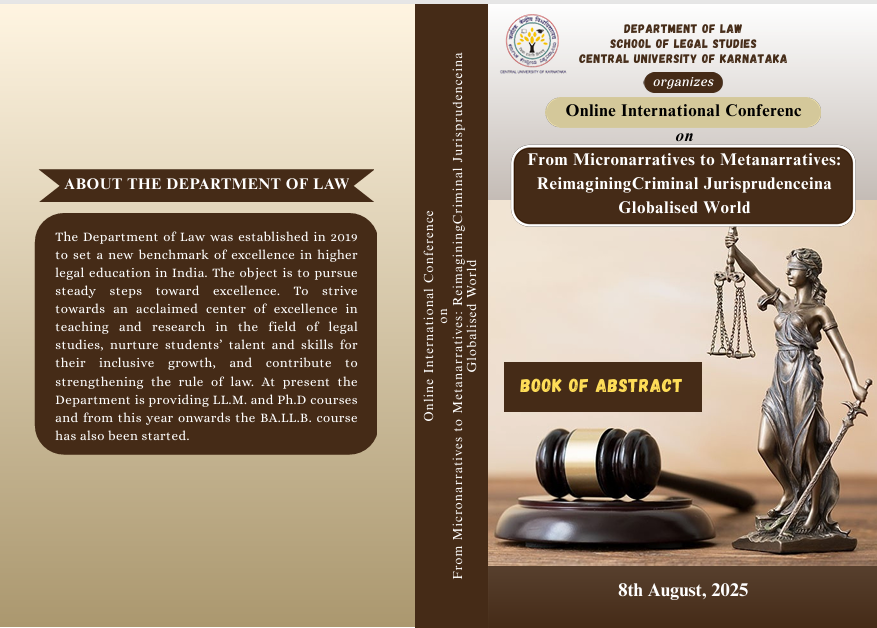
Abstract Book of the Online International Conference on From Micronarratives to Metanarratives: Reimagining Criminal Jurisprudence in a Globalised World
The Book of Abstracts of the International Conference on “From Micronarratives to Metanarratives: Reimagining Criminal Jurisprudence in a Globalised World”, organized by the Central University of Karnataka, Department of Law, presents a rich compilation of contemporary scholarship in criminal law. The volume captures diverse perspectives on emerging challenges such as digital crimes, environmental criminality, forensic reforms, cyber jurisdiction, juvenile justice, and decolonizing criminal jurisprudence. It reflects a critical engagement with India’s recent criminal law reforms, including the Bharatiya Nyaya Sanhita and Bharatiya Nagarik Suraksha Sanhita, while situating them within global human rights and comparative legal frameworks. By bridging localized experiences (micronarratives) with universal legal principles (metanarratives), the book fosters interdisciplinary dialogue among scholars, practitioners, and policymakers, offering innovative pathways toward a more inclusive, accountable, and technologically responsive criminal justice system
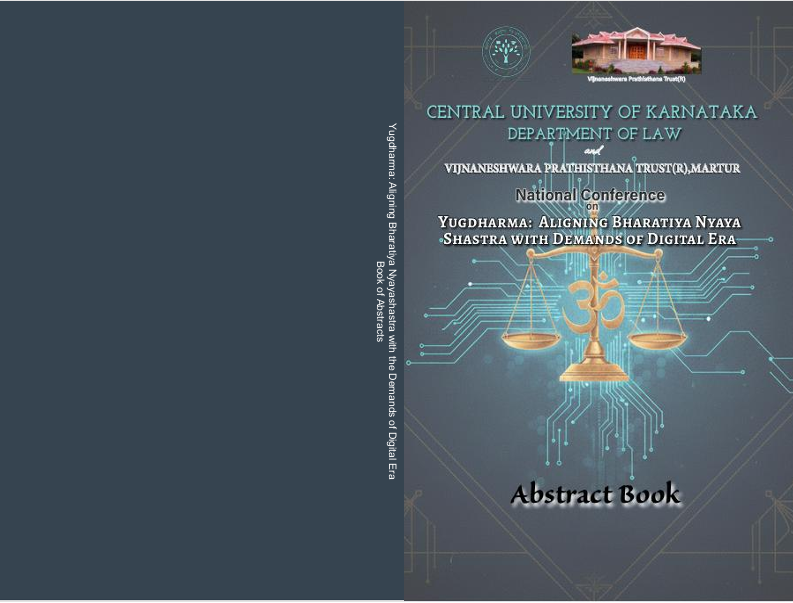
Abstract Book of the National Conference on Yugdharma: Aligning Bharatiya Nyayashastra with the Demands of Digital Era
The Book of Abstracts of the International Conference on “Yugdharma: Reimagining Dharma in the Contemporary World”, organized by the Central University of Karnataka, Department of Law, is a scholarly compilation exploring the evolving dimensions of dharma in modern legal, social, and ethical contexts. The volume brings together interdisciplinary research that connects classical Indian philosophical thought with present-day challenges such as constitutional morality, environmental sustainability, gender justice, human rights, and global governance. Contributors critically engage with ancient texts, jurisprudential traditions, and contemporary legal frameworks to reinterpret dharma as a dynamic principle guiding justice and social harmony in the 21st century. By bridging traditional wisdom with modern constitutional values, the book fosters dialogue between history and modernity, theory and practice. It serves as an intellectual platform for scholars, researchers, and practitioners seeking to understand how indigenous knowledge systems can meaningfully contribute to contemporary legal discourse and policy development in a rapidly transforming global order.